
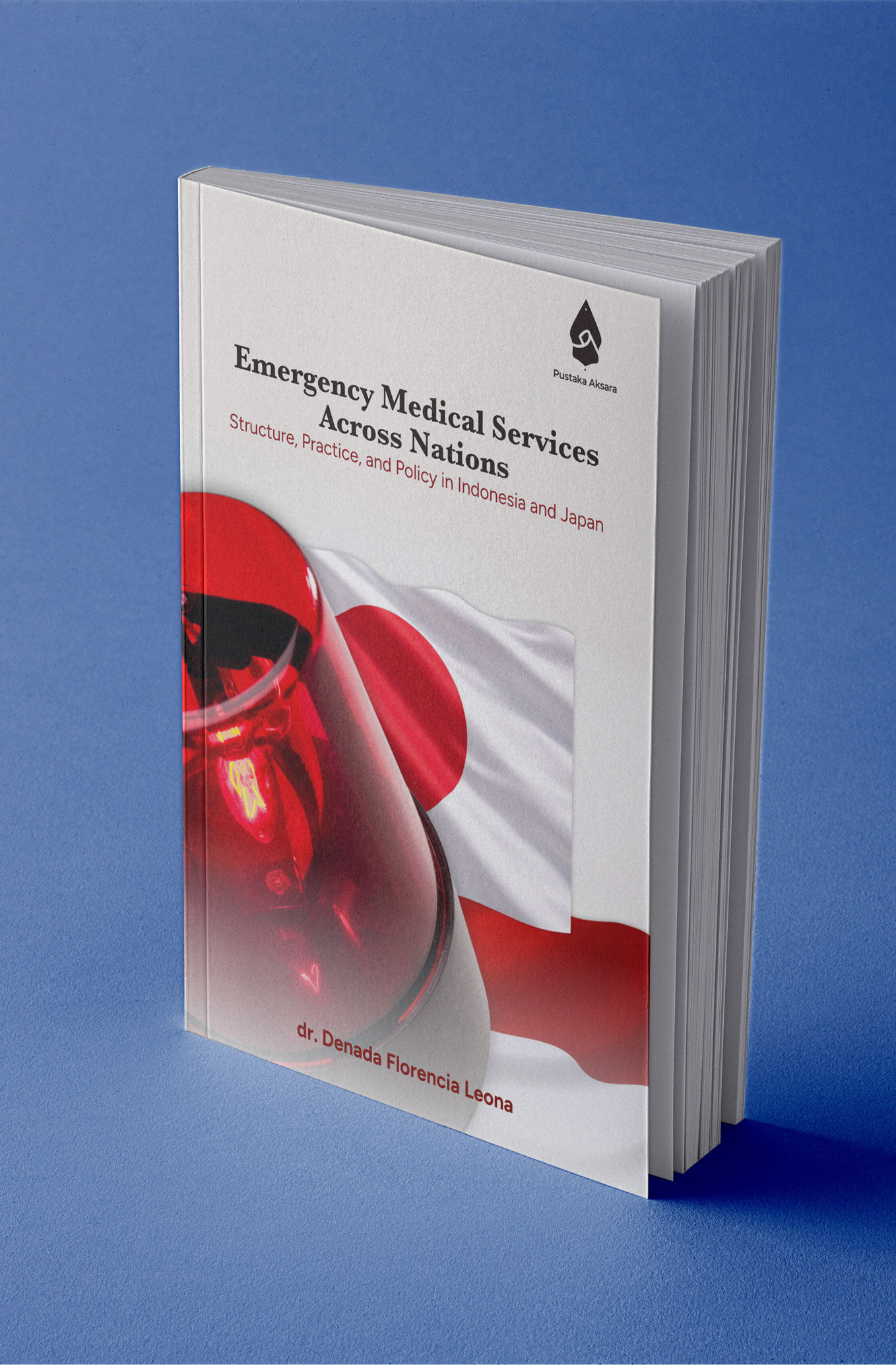
EMERGENCY MEDICAL SERVICES ACROSS NATIONS: STRUCTURE, PRACTICE, AND POLICY IN INDONESIA AND JAPAN
Rp. 52.000
Penulis: dr. Denada Florencia Leona
Panjang: 23
Lebar: 15
Halaman: 148
ISBN: 9786231616517
Sinopsis:
This monograph provides an in-depth comparative analysis of the Emergency Medical Services (EMS) systems in Indonesia and Japan, with a strong focus on their structures, functions, policies, clinical protocols, workforce development, and health system integration. It is designed as a comprehensive reference for academics, policymakers, healthcare professionals, and students in emergency medicine and public health. Chapter by chapter, the book explores how both countries have developed their EMS systems in response to unique geographical, demographic, economic, and political contexts. Indonesia’s EMS is examined in terms of its fragmentation, decentralization, coverage gaps, and emerging policy frameworks. Japan’s EMS is dissected through the lens of its national integration under the Fire and Disaster Management Agency (FDMA), high public awareness, advanced paramedic training (including ELSTs), and its widespread use of technology and disaster preparedness systems. The book covers: • EMS governance models and historical development • Training pathways and certification of EMS personnel • Hospital integration, triage protocols, and dispatch systems • Disaster response mechanisms and lessons from mass casualty events • The impact of demographic aging and chronic disease burden on EMS utilization • Financial frameworks and the role of national health insurance • Strengths, weaknesses, opportunities, and constraints within each system The monograph also discusses clinical themes such as common EMS emergency types (cardiovascular, trauma, respiratory, infectious disease), and innovations in prehospital care, such as air ambulance systems in Japan and community-based first responder programs in Indonesia. As a comparative reference, this book does not merely aim to highlight differences, it seeks to map lessons that may be adapted, transferred, or contextualized to support evidence-informed development of EMS systems in other low- and middle-income settings. In doing so, it contributes to global dialogue on equitable emergency care, health system resilience, and cross-national learning in health services.